Commercial EV charging is more than selecting a charger. A successful project depends on the property’s electrical infrastructure, utility requirements, parking layout, driver demand, charger type, operating costs, available incentives, and long-term financial objectives.
Furst Charge takes a feasibility-first approach. Before recommending a charging solution, we evaluate site conditions, available electrical capacity, utility considerations, charger configuration, potential funding opportunities, operating requirements, and projected economics.
Our goal is simple: help you determine whether EV charging makes technical, operational, and financial sense for your property before you make a major investment.
Commercial EV charging costs vary widely because every site has different electrical, construction, permitting, and utility requirements.
The total project cost may include:
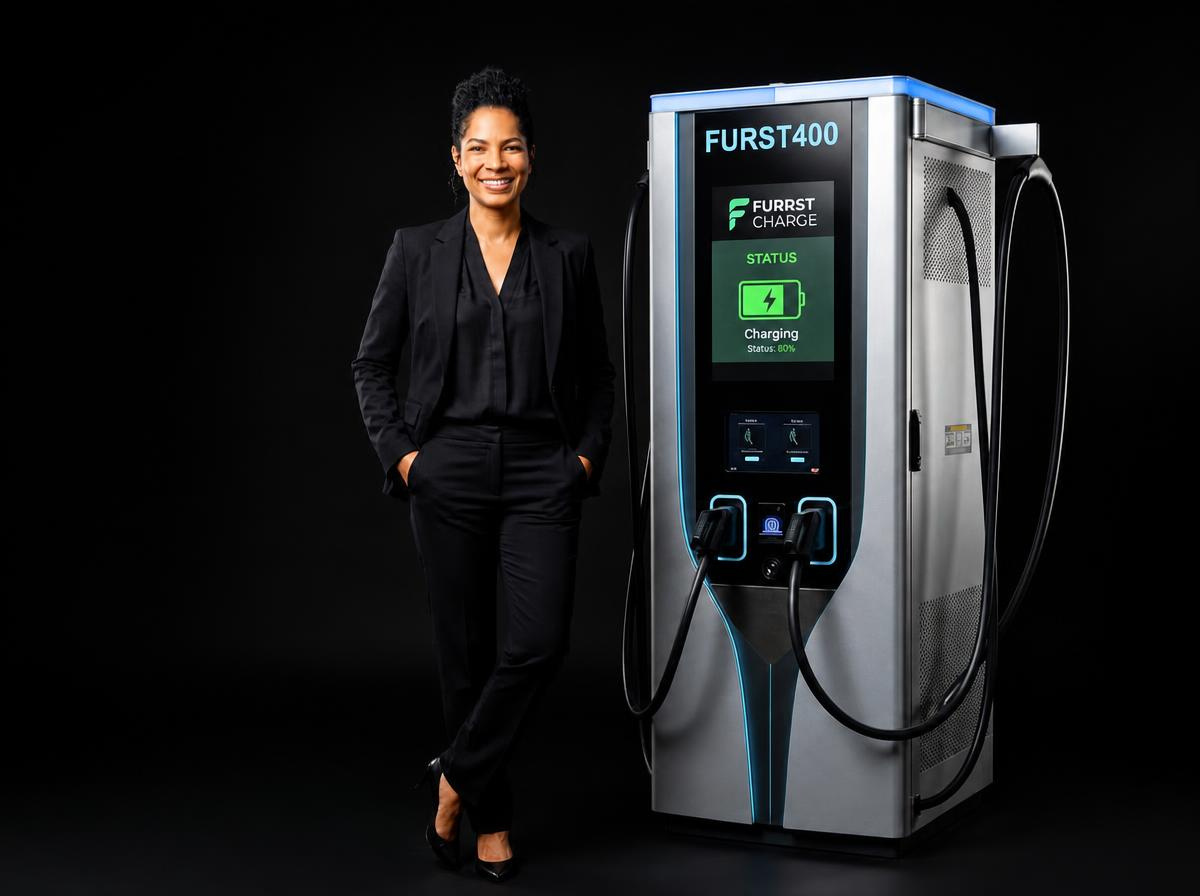
As a general illustration, a fully installed location with a 400 kW dual-port DC fast-charging system may cost approximately $200,000. That figure is an example—not a fixed quote or guaranteed project price.
The actual investment can be lower or significantly higher depending on the existing electrical service, required utility upgrades, distance from the power source, equipment selected, site layout, permitting requirements, and construction conditions.
Furst Charge evaluates the complete project—not just the charger price—so you understand the likely investment before moving forward.
The right funding structure depends on your property, capital plan, electrical conditions, expected charging demand, available incentives, and long-term goals.
Potential structures may include:
Eligibility, terms, and funding availability depend on site conditions, public access, location, utility capacity, projected utilization, ownership control, incentives, and project economics. Funding is not guaranteed.
Potentially. Some qualified sites may be eligible for a managed, co-funded, utility-supported, or site-host structure intended to reduce upfront capital requirements.
A property is more likely to be considered when it has a combination of factors such as:
Not every property will qualify, and Furst Charge does not guarantee financing, incentive awards, project approval, or charging revenue. A feasibility review is the first step.
Yes, EV charging can create a new revenue opportunity for businesses and property owners. However, revenue depends on whether the site has enough demand to support the investment and operating costs.
Key factors include:
EV charging may also create indirect value by increasing customer dwell time, supporting tenant retention, attracting drivers to a retail location, providing an employee or resident amenity, supporting fleet operations, or differentiating a commercial property from competitors.
Furst Charge develops a project pro forma to help estimate potential costs, revenue, and operating requirements. Actual revenue and return on investment are not guaranteed.
They can, depending on the ownership and operating model.
Potential commercial benefits may include:
The financial result depends on utilization, pricing, electricity costs, demand charges, maintenance, site access, local competition, and the agreement structure. Furst Charge evaluates these variables before recommending a project.
Depending on the property location and program availability, an EV charging project may be eligible for incentives or cost-reduction opportunities such as:
Utility make-ready programs can be especially valuable because they may help offset eligible electrical infrastructure work, such as utility-side upgrades, transformers, service equipment, conduit, or other required site improvements.
Program availability, eligibility, deadlines, funding levels, documentation, and award decisions vary by location and can change. Some programs require approval before equipment is ordered or construction begins.
Furst Charge can help identify applicable opportunities during project development, but incentive awards, grant funding, tax treatment, and program approval are determined by the applicable utility, agency, program administrator, or tax professional and are not guaranteed.
Furst Charge begins with a feasibility assessment to determine whether the property can support the right type and scale of EV charging.
Our review may include:
Limited electrical capacity does not automatically mean a property cannot support EV charging. It may be possible to use load management, power sharing, charging schedules, battery energy storage, phased deployment, or utility upgrades depending on the site.
There is no universal answer. The right number of chargers depends on the property type, parking patterns, driver demand, available power, business objectives, and growth plan.
Furst Charge considers:
For example, a multifamily property may begin with a smaller number of Level 2 ports for overnight resident charging. A retail center, travel corridor, or high-turnover commercial property may require DC fast charging to serve drivers who need to charge quickly.
Our objective is to avoid overbuilding infrastructure that will not be used while ensuring the site can grow as demand increases.
Yes. Many properties benefit from a phased approach.
A phased project may include:
Planning ahead can reduce the need to repeat trenching, civil work, electrical upgrades, or permitting later. Furst Charge can help design an initial installation that supports future expansion when it makes economic sense.
Project timelines depend on the size and complexity of the installation.
A basic Level 2 project may have a shorter timeline, while a DC fast-charging project can require more time for:
Furst Charge evaluates these requirements during project development so you can establish a more realistic timeline before construction begins.
Construction can usually be planned to minimize disruption. The degree of impact depends on the location of the charging spaces, trenching route, electrical-room access, required utility work, parking availability, and project schedule.
Furst Charge works with property owners to help coordinate site access, parking closures, construction sequencing, and installation timing. In many cases, work can be phased to keep the property accessible and operational throughout the project.
The main differences are charging speed, power output, electrical requirements, and the type of property they serve best.
Charging type | Best suited for | Typical use case |
|---|---|---|
| Level 2 charging | Longer-dwell locations | Apartments, workplaces, hotels, offices, parking facilities, employee parking, and destinations where vehicles remain parked for several hours |
| DC fast charging | Shorter-dwell or high-throughput locations | Retail centers, highway corridors, convenience locations, public charging sites, commercial destinations, and fleet operations |
Level 2 chargers use AC power and are often appropriate where vehicles remain parked for extended periods.
DC fast chargers deliver DC power directly to the vehicle battery and can charge compatible vehicles substantially faster. They generally require more electrical capacity, more complex infrastructure, and greater upfront investment.
Furst Charge can evaluate whether Level 2 charging, DC fast charging, or a blended approach is appropriate for your property.
Electricity use depends on the charger’s power rating, vehicle demand, battery state of charge, charging duration, utilization, and the vehicle’s charging curve.
For example, a 400 kW DC fast charger is capable of delivering up to 400 kW of charging power under appropriate operating conditions. It will not necessarily draw or deliver its maximum output during every charging session.
Actual energy use depends on factors such as:
Furst Charge evaluates expected charging demand, operating behavior, and electrical capacity to recommend the appropriate charging system.
A 480 kW DC fast-charging system can deliver up to 480 kW of charging power under appropriate conditions. However, installing a charger of that size requires more than selecting equipment with a 480 kW rating.
The site must be evaluated for:
The actual power drawn from the grid can vary based on vehicle demand, charger configuration, how power is shared across ports, charging behavior, and energy-management controls.
Yes. A property with limited electrical capacity may still be able to support EV charging.
Potential solutions may include:
These solutions can help maximize available capacity and may reduce, delay, or better manage certain infrastructure upgrades. The appropriate approach depends on the property’s existing load, utility conditions, desired charger power, charging demand, and project economics.
Furst Charge can provide support services based on the selected project and operating agreement. Services may include:
The final scope of service is defined in the applicable proposal, service agreement, or operating agreement.
Charging issues may be identified through remote monitoring alerts, driver reports, site inspections, or routine maintenance.
Depending on the equipment, network, and service agreement, Furst Charge may:
Response times, covered services, exclusions, and responsibility for parts or repairs depend on the applicable equipment warranty and operating or maintenance agreement.
Pricing authority depends on the project’s ownership and operating structure.
For an owner-funded project, the property owner may have greater input into pricing strategy. For a managed, co-funded, public-charging, or revenue-sharing project, pricing may be established collaboratively or managed by the charging operator.
Pricing decisions typically consider:
Furst Charge can help develop a pricing approach that balances driver adoption, operating costs, and project economics.
Access and payment options depend on the charger hardware, charging network, and operating model.
Commercial charging systems may support options such as:
Furst Charge can help select a payment and access experience that fits the intended users of the site.
Furst Charge does not approach EV charging as a simple equipment sale. We begin by determining whether the project makes sense for the property.
Before recommending a full project, we evaluate:
Our process is designed to give property owners a clear picture of the opportunity before they commit capital, parking spaces, or operational resources.
Assess. Analyze. Design. Build. Operate.
Furst Charge helps businesses, property owners, fleets, and communities make informed EV charging decisions with transparent site analysis, practical project planning, and long-term operational support.
The first step is a Furst Charge feasibility assessment. We will evaluate your site, electrical infrastructure, parking layout, charger options, utility environment, potential incentives, and project economics.